

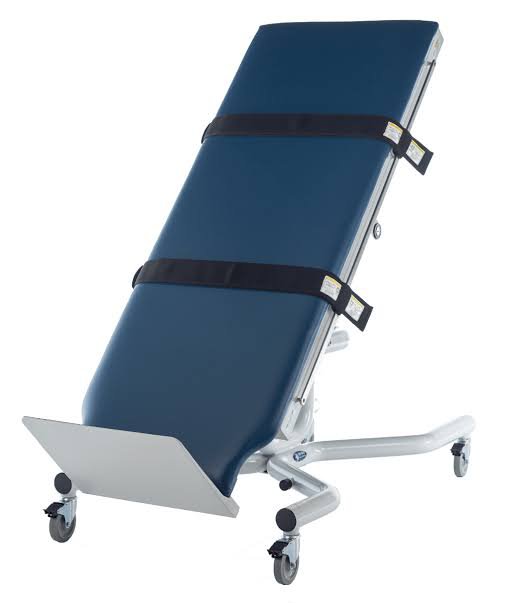
Description
An Electric Tilt Table is a motorized rehabilitation device specifically engineered to safely and progressively transition patients from a horizontal (supine) position to an upright (vertical) position. This controlled process is fundamental for early mobilization and managing the physiological and musculoskeletal effects of prolonged bed rest, neurological injury, or chronic illness.
I. 🎯 Primary Therapeutic Uses
The tilt table is an essential tool in physiotherapy, neurology, and cardiology for several key patient populations and treatment goals:
Orthostatic Rehabilitation: It gradually re-trains the autonomic nervous system to manage gravity’s effect on blood pressure, effectively treating or mitigating orthostatic hypotension (sudden drop in blood pressure upon standing).
Early Mobilization: Allows critically ill, post-operative, or severely weakened patients (e.g., following stroke, spinal cord injury, or TBI) to experience standing and weight-bearing in a secure, controlled environment.
Musculoskeletal Health: Encourages weight-bearing stimulation to counteract bone density loss (osteopenia) and muscle atrophy caused by immobility.
Secondary Complication Prevention: Assists in preventing complications of prolonged lying, such as Deep Vein Thrombosis (DVT), respiratory complications, and pressure sores, by improving circulation and redistributing pressure.
Functional Training: The vertical position is used for balance training, core stability, and pre-gait activities, preparing the patient for standing and walking.











Reviews
There are no reviews yet.