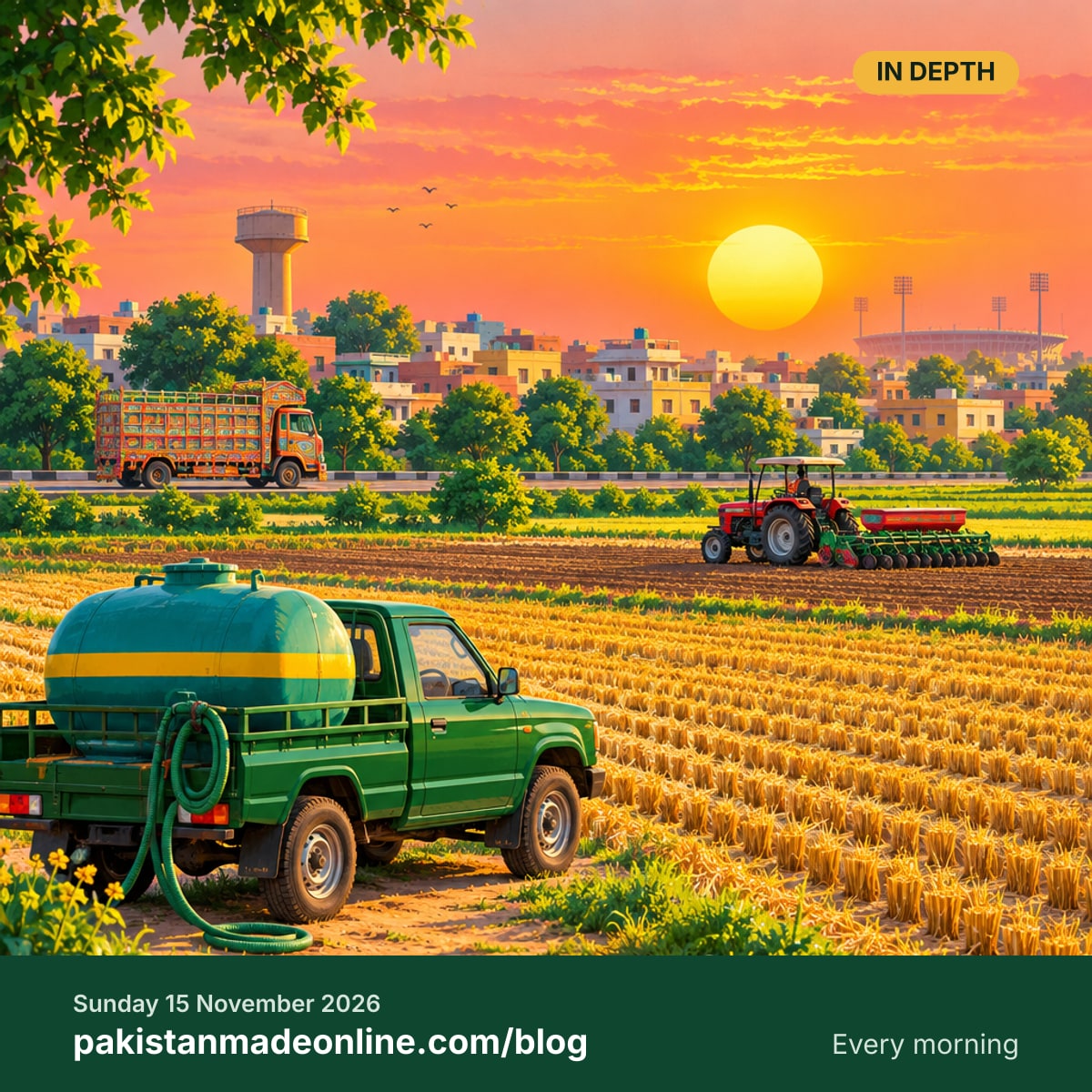
Lahore’s AQI today is forecast at around 150 after a weekend that undid Friday’s clear spell. The city’s air-quality index reached 244 early on Saturday, and IQAir’s reading at 9 pm was still 227, in the “very unhealthy” band, with PM2.5 the main pollutant. Monday’s forecast is 158, and no rain is in sight to wash it down again.
What happened to Friday’s clear air
A spell of wind and drizzle on Thursday and Friday pulled the index down to around 116, the lowest in weeks. It did not last a day. By Saturday morning the reading was 244 city-wide, with Multan Road at 500, Safari Park at 285 and DHA Phase 6 at 251, as 24NewsHD reported from the monitors. The Met Office expects dry weather, 16 °C in the morning and about 26 °C by afternoon, with winds of only 5 km/h; still air is what lets the haze settle.
Where the smoke comes from
Part of it is the city’s own: exhaust, construction dust and industry. The seasonal part is rice stubble, burned after the October harvest because it is the quickest and cheapest way to clear a field for wheat; the smoke drifts into Lahore and the towns around it.
This year Punjab has a unit dedicated to putting those fires out. A force of 750 staff, split into 67 quick-response teams in the main rice districts, is meant to reach a reported fire within 10 to 15 minutes. In one 24-hour period last week it logged 679 reports of field fires and says it put out 650 of them. The fine for burning is Rs 15,000 per acre, and a farmer who does not pay can be prosecuted and jailed for up to six months, according to the Punjab Agriculture Department. Arab News carried the Reuters report from the fields.
The carrot beside the stick is the super seeder, a machine that sows wheat straight into the standing stubble so there is nothing to burn. More than 10,000 have been distributed with the government paying 60 per cent of the cost and the farmer 40, The Nation reported. Satellite data show less burned area than usual for this point in the season, on both sides of the border, though residents cannot feel it yet.
What it has already changed
The most visible casualty is cricket: the second Pakistan–Sri Lanka Test, due at the Gaddafi Stadium from Tuesday 17 November, was moved to Rawalpindi on 10 November because of the air, Dawn reported. The dates stayed the same.
What to watch
Wind and rain decide the next few days. The index drops within hours of a breeze or a shower and climbs back within a day of still, dry weather, which is the forecast. Check IQAir or the Punjab EPD’s monitors in the morning rather than relying on yesterday’s figure.
For anyone driving through it, our guide to keeping a car’s interior clean in smog season has a ten-minute weekly routine. Today’s other news is in Trending today.