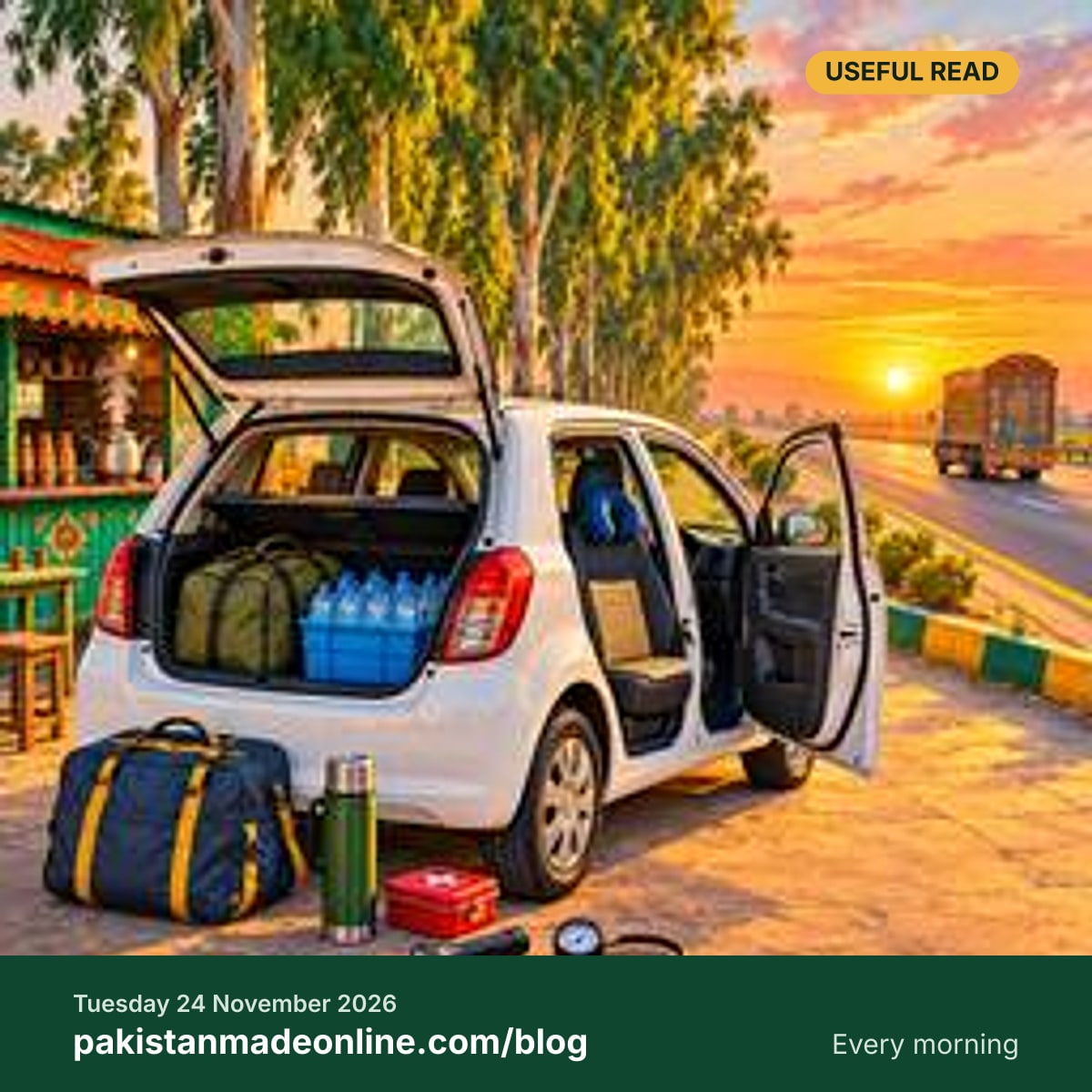
A long drive checklist has three parts: the car, the seat, and the stops. Most people check the first, forget the second and improvise the third, which is why a Lahore to Karachi run ends with a stiff driver and an argument about where to eat. Here are fifteen things, in three short lists, to go through the evening before you take the motorway.
What should I check on the car?
Seven things, none needing a mechanic.
- Tyres, including the spare. Check the pressure cold, before the first drive of the day, against the sticker inside the driver’s door, and look at the tread and sidewalls for cuts or bulges. Then check the spare; a flat spare is the one people discover on the hard shoulder.
- Oil, coolant and washer fluid. Dipstick on level ground with the engine cold, coolant between the marks on the tank, and the washer bottle full: a motorway windscreen collects dust, insects and, in winter, a film of smog that smears without water.
- Lights and horn. Walk round the car while someone works the switches: both beams, indicators, brake lights, hazards. In the winter fog a car with one tail light is hard to judge from behind.
- Brakes and wipers. A soft pedal or a pull to one side is a workshop visit, not a checklist item. Blades that streak are cheap to replace and take a minute.
- Fuel and the toll card. Fill up before you join the motorway, where service areas are far apart, and top up the toll card or app so the booth is a slow-down rather than a stop.
- Papers. Registration, licence, insurance paper and CNIC, together in one place you can reach without unbuckling.
- The boot kit. A jack and wheel brace that fit your car, a torch, jump leads, a warning triangle, a tow rope, a first-aid box, a couple of litres of water for the car as well as the people, and a tyre gauge so the roadside pump’s reading is not the only one you trust.
What about the seat I will sit in for six hours?
The list people skip, and the one the driver remembers.
- Set the seat before you move. Slide it so your knee stays slightly bent with the brake fully pressed, bring the backrest more upright than for a short trip, and set the headrest with its middle level with the top of your ears.
- Give your neck something to lean on. The gap between the headrest and the back of the head is what makes people fidget by the second hour. A car neck pillow straps to the headrest and fills it; if you are choosing between that and the horseshoe kind from the plane, our comparison of the two explains which stays put in a car seat.
- Think about the base of the seat. Small-car seats are often flat and firm, fine for twenty minutes and not for six hours. The coccyx seat cushion, with its cut-out at the back, sits on the base and changes where your weight lands; our note on using one in the car covers which way round it goes. The car comfort accessories guide sets all of these side by side.
- Clear the front of the car. Phone on a holder, not in a lap. Water, tissues, charger, sunglasses and the toll card in the armrest box or the door pocket, so nothing needs a reach behind the seat at speed.
How should I plan the stops?
Decided before you leave, not when everyone is hungry.
- A stop every two hours, whether you need it or not. Ten minutes out of the car and a walk to the far end of the car park, and the next two hours are easier. Mark the service areas on the map the night before.
- Food and water in the car. Fruit, nuts, biscuits, and more water than you think, especially with children. The service area you were counting on may be closed or crowded.
- Swap drivers if you can. Two licences means the passenger rests properly for a shift. If you are the only driver, be honest about the last hour; that is when the two-hour stop matters most.
- Timing and weather. In winter the fog on the Punjab and Sindh motorways is thickest from late night to mid-morning; leaving after it lifts costs an hour and saves a crawl. In summer, leave before dawn and put the hottest hours behind the windscreen rather than in front of it.
The night before, in one minute
Tyres and spare, fluids, lights, brakes and wipers, fuel and card, papers, boot kit; seat, neck pillow, seat cushion, clear console; stops, food and water, a second driver, the hour to leave. Most of the fifteen are a look rather than a job.